Media Summary: In this video, the following materials are covered: 1) the beauty of linear & The video explains how to compute y(n) of an Digital Signal Processing BEC502 VTU Model QP h[n]=[1,2,1,โˆ’1]. Determine the

Time Domain Tutorial 8 Lti Systems Impulse Response Convolution - Detailed Analysis & Overview

In this video, the following materials are covered: 1) the beauty of linear & The video explains how to compute y(n) of an Digital Signal Processing BEC502 VTU Model QP h[n]=[1,2,1,โˆ’1]. Determine the ANDROID APP / WEBSITE / IOS : 1) Android app: 2)ย ... In this lecture we will understand the introduction to

Photo Gallery

Time domain - tutorial 8: LTI systems, impulse response & convolution
Impulse Response and Convolution
Q1b. Compute the convolution sum y(n) with the input x(n) and impulse response h(n)
The impulse response of a linear time invariant system is h[๐’]. find the response of the system.
Linear Time-Invariant (LTI) Systems
Time domain - tutorial 11: system properties from impulse response
Linear Time-Invariant(LTI) system- concept, convolution, properties, deconvolution, identity system
Impulse Response & Transfer Function of a System
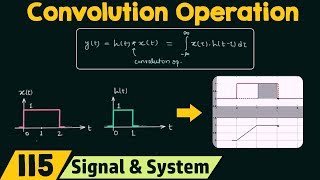
Introduction to Convolution Operation
Discrete-Time LTI Systems Analysis | Convolution Sum & Impulse Response Explained | DSP
#105 LTI Systems (Linear Time Invariant Systems) || EC Academy
Lecture-14: Chapter 2: Introduction to Time domain representation, Convolution Sum, Examples
View Detailed Profile
Time domain - tutorial 8: LTI systems, impulse response & convolution

Time domain - tutorial 8: LTI systems, impulse response & convolution

In this video, the following materials are covered: 1) the beauty of linear &

Impulse Response and Convolution

Impulse Response and Convolution

Signal and

Q1b. Compute the convolution sum y(n) with the input x(n) and impulse response h(n)

Q1b. Compute the convolution sum y(n) with the input x(n) and impulse response h(n)

The video explains how to compute y(n) of an

The impulse response of a linear time invariant system is h[๐’]. find the response of the system.

The impulse response of a linear time invariant system is h[๐’]. find the response of the system.

Digital Signal Processing BEC502 VTU Model QP h[n]=[1,2,1,โˆ’1]. Determine the

Linear Time-Invariant (LTI) Systems

Linear Time-Invariant (LTI) Systems

Signal and System: Linear

Time domain - tutorial 11: system properties from impulse response

Time domain - tutorial 11: system properties from impulse response

In this video, we learn how to find

Linear Time-Invariant(LTI) system- concept, convolution, properties, deconvolution, identity system

Linear Time-Invariant(LTI) system- concept, convolution, properties, deconvolution, identity system

ANDROID APP / WEBSITE / IOS : 1) Android app: https://play.google.com/store/apps/details?id=co.kevin.nxpgd 2)ย ...

Impulse Response & Transfer Function of a System

Impulse Response & Transfer Function of a System

Impulse Response

Introduction to Convolution Operation

Introduction to Convolution Operation

Signal and

Discrete-Time LTI Systems Analysis | Convolution Sum & Impulse Response Explained | DSP

Discrete-Time LTI Systems Analysis | Convolution Sum & Impulse Response Explained | DSP

Master the Analysis of Discrete-

#105 LTI Systems (Linear Time Invariant Systems) || EC Academy

#105 LTI Systems (Linear Time Invariant Systems) || EC Academy

In this lecture we will understand the introduction to

Lecture-14: Chapter 2: Introduction to Time domain representation, Convolution Sum, Examples

Lecture-14: Chapter 2: Introduction to Time domain representation, Convolution Sum, Examples

Chapter 2:

Time domain representation of LTI system-Lecture 43

Time domain representation of LTI system-Lecture 43

So we will be studying the different