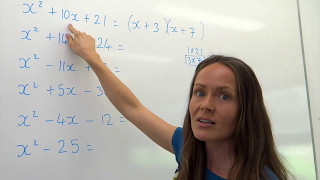
Media Summary: In this lesson I show you all the basic methods you need to answer GCSE/IGCSE function questions. I have another 'Functions' ... How to factorise quadratics when there's a number in front of the x squared and you don't just want to guess! How to expand single brackets and simplify. Remember, 'expanding' brackets is just the same as 'multiplying out' brackets.
The Maths Prof Nets - Detailed Analysis & Overview
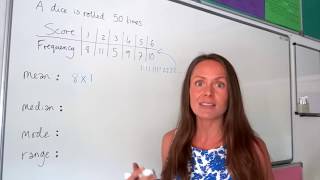
In this lesson I show you all the basic methods you need to answer GCSE/IGCSE function questions. I have another 'Functions' ... How to factorise quadratics when there's a number in front of the x squared and you don't just want to guess! How to expand single brackets and simplify. Remember, 'expanding' brackets is just the same as 'multiplying out' brackets. Learn how to calculate the mean, median, mode and range from FREQUENCY TABLES! I hope you find the lesson useful! How to write numbers in standard (index) form (a handy way of writing really big or really tiny numbers! ). For part 2 please go to ... In this lesson I show you how to factorise using a double set of brackets. For other related lessons go to Factorising (putting ...
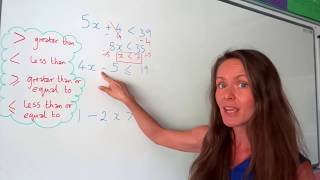
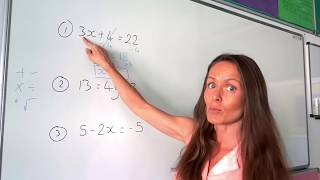
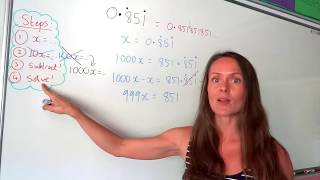
Learn how to solve quadratic equations by factorising (aka factoring!). This basically means putting the equations into brackets in ... Lots of examples of solving quadratic equations by completing the square! Includes harder examples such as when there is a ... Learn how to solve linear inequalities. *Key point: The inequality sign flips around if you multiply or divide the inequality by a ... Learn how to solve different types of linear equations (when the unknown is on one side of the equals sign). Second set of ... 📞 Call / WhatsApp: 7070701009 7070701005 8124408794 7550100920 📧 Email: enquiry.com 📲 Professor Academy ... Learn how to change recurring decimals into fractions WITHOUT a calculator! :-)
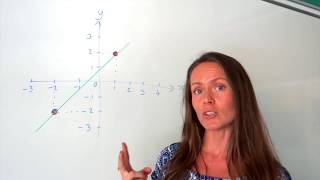
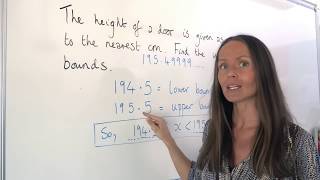
In this lesson I show you how to shade venn diagrams. In the first few examples I use 2 sets and later on, I show you examples ... In this lesson I show you how to work out the gradient when you are given either two points on the line or a sketch of the line. Basic factorising using a single set of brackets. *HCF = highest common factor* Understand and learn how to calculate upper and lower bounds. The first example explains what upper and lower bounds are. In this lesson I show you how to differentiate. Here's the breakdown in case you want to skip to a specific part of the lesson ...