Media Summary: Use the ``Grayscale Operators'' with ``Min'' option to suppress the highlights (hotspots) in a grayscale image. Pixel intensitiies ... (qsm) cleanup: Set the ``Stop webcam flag'' and close an open file, for example. This video supplements the book " Use the ``Caliper'' to measure the perpendicular projection distance between a baseline defined by two points and a third point.

Ni Vision Remove Small Objects - Detailed Analysis & Overview

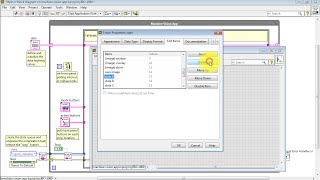
Use the ``Grayscale Operators'' with ``Min'' option to suppress the highlights (hotspots) in a grayscale image. Pixel intensitiies ... (qsm) cleanup: Set the ``Stop webcam flag'' and close an open file, for example. This video supplements the book " Use the ``Caliper'' to measure the perpendicular projection distance between a baseline defined by two points and a third point. Change the camera mode from color to grayscale and also change the resolution; demonstrate where to Get the ROI (region of interest) from the main image display with a "Property Node." Use a default ROI defined by the Use the ``Particle Analysis'' step to report the number of particles found in the image and the area of each particle. This video ...

This video is part of The Eyes Have It website and Eyes Have It mobile app. Find the X-Y coordinates of the energy center (centroid) of an image. This video supplements the book " Use the ``Caliper'' to make multiple measurements in a single step. This video supplements the book "

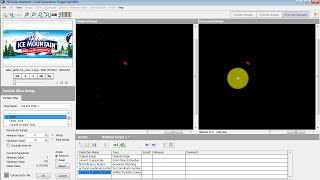
Photo Gallery

NI Vision: Remove Small Objects
NI Vision: Remove Small-Area Particles
NI Vision: Remove State
NI Vision: Remove Data Lane
NI Vision: Suppress Highlights
NI Vision: Remove State with Review/Accept Changes
NI Vision: (qsm) cleanup
NI Vision: Fill Holes
NI Vision: Measure a Perpendicular Projection Distance
NI Vision: Change Camera Mode
NI Vision: Get ROI from Image Display or Default
NI Vision: Report Area of Particles
View Detailed Profile
NI Vision: Remove Small Objects

NI Vision: Remove Small Objects

Remove small objects

NI Vision: Remove Small-Area Particles

NI Vision: Remove Small-Area Particles

Use the ``Particle Filter'' to

NI Vision: Remove State

NI Vision: Remove State

Remove

NI Vision: Remove Data Lane

NI Vision: Remove Data Lane

Remove

NI Vision: Suppress Highlights

NI Vision: Suppress Highlights

Use the ``Grayscale | Operators'' with ``Min'' option to suppress the highlights (hotspots) in a grayscale image. Pixel intensitiies ...

NI Vision: Remove State with Review/Accept Changes

NI Vision: Remove State with Review/Accept Changes

Remove

NI Vision: (qsm) cleanup

NI Vision: (qsm) cleanup

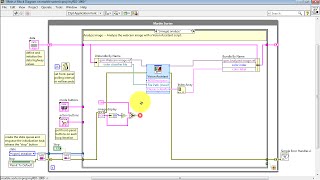
(qsm) cleanup: Set the ``Stop webcam flag'' and close an open file, for example. This video supplements the book "

NI Vision: Fill Holes

NI Vision: Fill Holes

Fill holes in

NI Vision: Measure a Perpendicular Projection Distance

NI Vision: Measure a Perpendicular Projection Distance

Use the ``Caliper'' to measure the perpendicular projection distance between a baseline defined by two points and a third point.

NI Vision: Change Camera Mode

NI Vision: Change Camera Mode

Change the camera mode from color to grayscale and also change the resolution; demonstrate where to

NI Vision: Get ROI from Image Display or Default

NI Vision: Get ROI from Image Display or Default

Get the ROI (region of interest) from the main image display with a "Property Node." Use a default ROI defined by the

NI Vision: Report Area of Particles

NI Vision: Report Area of Particles

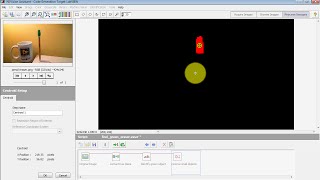
Use the ``Particle Analysis'' step to report the number of particles found in the image and the area of each particle. This video ...

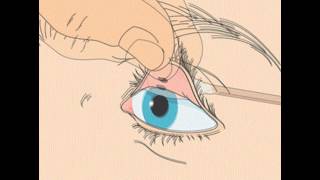
How to remove a foreign body from the eye

How to remove a foreign body from the eye

This video is part of The Eyes Have It website and Eyes Have It mobile app. http://www.kellogg.umich.edu/theeyeshaveit/ ...

NI Vision: Find Energy Center (Centroid)

NI Vision: Find Energy Center (Centroid)

Find the X-Y coordinates of the energy center (centroid) of an image. This video supplements the book "

NI Vision: Multiple Caliper Measurements

NI Vision: Multiple Caliper Measurements

Use the ``Caliper'' to make multiple measurements in a single step. This video supplements the book "