Media Summary: In this video, we see some examples using instant-runoff voting to find the winner of an election. For more info, visit the In this video, we learn the basic concepts we use to solve apportionment problems. Once you have watched this video, you're ... In this video, we practice using sequential pairwise voting to find the winner of an election. We also discuss how sequential ...

Math For Liberal Studies Lecture 2 2 1 Preference Lists - Detailed Analysis & Overview

In this video, we see some examples using instant-runoff voting to find the winner of an election. For more info, visit the In this video, we learn the basic concepts we use to solve apportionment problems. Once you have watched this video, you're ... In this video, we practice using sequential pairwise voting to find the winner of an election. We also discuss how sequential ...
Photo Gallery

Math for Liberal Studies - Lecture 2.2.1 Preference Lists
Math for Liberal Studies - Lecture 2.1.2 Plurality and Majority
Math for Liberal Studies: Instant-Runoff Voting
Math for Liberal Studies - Lecture 2.5.2 Runoff Voting
Math for Liberal Studies - Lecture 2.9.2 The Banzhaf Power Index
Math for Liberal Studies - Lecture 1.8.2 One-at-a-Time Algorithms
Math for Liberal Studies - Lecture 3.1.2 Errors and Digits
Math for Liberal Studies - Lecture 2.4.2 Irrelevant Alternatives
Math for Liberal Studies: Apportionment -- Introduction
Math for Liberal Studies - Lecture 2.8.2 Coalitions and Special Voters
Math for Liberal Studies - Lecture 2.1.1 Introduction to Controversial Elections
Math for Liberal Studies - Lecture 2.6.2 Approval and Range Voting
View Detailed Profile
Math for Liberal Studies - Lecture 2.2.1 Preference Lists

Math for Liberal Studies - Lecture 2.2.1 Preference Lists

This is the first video

Math for Liberal Studies - Lecture 2.1.2 Plurality and Majority

Math for Liberal Studies - Lecture 2.1.2 Plurality and Majority

This is the second video

Math for Liberal Studies: Instant-Runoff Voting

Math for Liberal Studies: Instant-Runoff Voting

In this video, we see some examples using instant-runoff voting to find the winner of an election. For more info, visit the

Math for Liberal Studies - Lecture 2.5.2 Runoff Voting

Math for Liberal Studies - Lecture 2.5.2 Runoff Voting

This is the second video

Math for Liberal Studies - Lecture 2.9.2 The Banzhaf Power Index

Math for Liberal Studies - Lecture 2.9.2 The Banzhaf Power Index

This is the second video for

Math for Liberal Studies - Lecture 1.8.2 One-at-a-Time Algorithms

Math for Liberal Studies - Lecture 1.8.2 One-at-a-Time Algorithms

This is the second video for

Math for Liberal Studies - Lecture 3.1.2 Errors and Digits

Math for Liberal Studies - Lecture 3.1.2 Errors and Digits

This is the second video

Math for Liberal Studies - Lecture 2.4.2 Irrelevant Alternatives

Math for Liberal Studies - Lecture 2.4.2 Irrelevant Alternatives

This is the second video

Math for Liberal Studies: Apportionment -- Introduction

Math for Liberal Studies: Apportionment -- Introduction

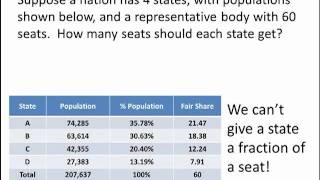
In this video, we learn the basic concepts we use to solve apportionment problems. Once you have watched this video, you're ...

Math for Liberal Studies - Lecture 2.8.2 Coalitions and Special Voters

Math for Liberal Studies - Lecture 2.8.2 Coalitions and Special Voters

This is the second video for

Math for Liberal Studies - Lecture 2.1.1 Introduction to Controversial Elections

Math for Liberal Studies - Lecture 2.1.1 Introduction to Controversial Elections

This is the first video for

Math for Liberal Studies - Lecture 2.6.2 Approval and Range Voting

Math for Liberal Studies - Lecture 2.6.2 Approval and Range Voting

This is the second video

Math for Liberal Studies - Lecture 2.3.1 Pairwise Elections

Math for Liberal Studies - Lecture 2.3.1 Pairwise Elections

This is the first video

Math for Liberal Studies: Sequential Pairwise Voting

Math for Liberal Studies: Sequential Pairwise Voting

In this video, we practice using sequential pairwise voting to find the winner of an election. We also discuss how sequential ...

Math for Liberal Studies - Lecture 2.3.2 The Condorcet Winner Criterion

Math for Liberal Studies - Lecture 2.3.2 The Condorcet Winner Criterion

This is the second video